RV rental in Florida runs through two channels: traditional fleet companies and peer-to-peer marketplaces where private owners list their own rigs. Peer-to-peer usually offers more selection and better rates, with the trade-off that quality, insurance, and support vary by owner rather than being standardized.
The RV fantasy is durable and mostly wrong. In the fantasy, you are parked at a beach at sunset with a coffee. In reality, you spent forty minutes reversing into a site while a retired man from Michigan gave unsolicited guidance, and now you are learning what a black tank is.
That is not an argument against RVs. It is an argument for knowing what you signed up for. Our partner platform LendRV rents RVs among other things, so we have skin in this — which is exactly why we would rather you go in with clear eyes than come back disappointed.
The two ways to rent
Traditional rental fleets operate like a car rental company: standardized units, standardized insurance, a depot, a counter, a support line. Predictable, generally more expensive, and the fleet is usually a narrow range of similar rigs.
Peer-to-peer marketplaces let private owners list their own RV. Much wider selection, often better pricing, and you are renting from a person rather than a company. The trade-off is variance: the rig, the cleanliness, the handover, and the responsiveness all depend on that individual owner.
Our own partner, LendRV, is the peer-to-peer model: RVs and campers, plus boats, golf carts, and Jeeps and 4x4s. Listing is free and owners set their own price and their own rules. Every trip is backed by rental protection, and every renter is verified before pickup. It operates across South Florida — Miami, Fort Lauderdale, West Palm Beach, and Naples. The flow is three steps: find or list, book and verify, then go and earn, with owners paid out after each trip.
RV classes, explained without the brochure language
| Class | What it is | Honest take |
|---|---|---|
| Class A | The bus-looking one | Most space, worst to drive, worst fuel. Not a first rental. |
| Class B | Camper van | Easy to drive and park, genuinely small inside. Couples, not families of six. |
| Class C | Cab-over, van chassis | The family default. Drives like a big truck, sleeps a real family. |
| Travel trailer | Towed | Cheapest to rent — if you have a vehicle that can legally and safely tow it. |
| Fifth wheel | Towed, pickup required | Spacious, needs a serious truck and real skill. |
For a first-time family rental in Florida, a Class C is almost always the answer. The towing options look cheap until you price the truck you do not own, and a Class A is a lot of vehicle to learn on with your family aboard.
What it actually costs — the line items nobody quotes
The nightly rate is the beginning of the number, not the number. Budget for all of this:
- Mileage. Many rentals include a limited number of miles per night and charge per mile beyond it. This is the single biggest surprise on a long Florida drive.
- Generator hours. Often billed per hour of use. In a Florida summer, you will run air conditioning.
- Fuel. A Class C is heavy. Do the arithmetic on your route honestly.
- Campground fees. Per night, on top of the RV. Sites with full hookups cost more.
- Cleaning and dump fees. Sometimes optional, sometimes mandatory, occasionally both.
- Insurance. Verify what the platform's protection covers and what your own policy or credit card does not.
- Kit and bedding. Frequently an add-on rather than included.
The nightly rate is the beginning of the number, not the number.
Add those up before you compare an RV week to a house week, because most people compare the RV nightly rate to a house nightly rate and reach a conclusion that the campground invoice later disproves.
Florida-specific realities
- Winter is peak. December through March, snowbirds fill Florida campgrounds. Popular state park sites book out far in advance.
- Summer is brutal in an RV. Heat and humidity mean constant air conditioning, which means hookups or generator hours, which means cost. This is the least fun season to learn RV life.
- Hurricane season overlaps the cheap season. June 1 to November 30 — see our hurricane-season booking guide, and note an RV gives you mobility but no protection.
- Bugs are real. Coastal and inland Florida in the wet season is a different experience at dusk.
- Not everywhere allows them. Many communities and rental properties prohibit RVs and trailers on site — including our own Waters Edge Lodge, where RVs and trailers are explicitly prohibited under the house rules. Never assume you can park a rig at a rental home.
Before you drive it away
- Walk the entire rig on video with the owner. Every scratch, every appliance, every tank.
- Have them physically demonstrate the hookups, the dump procedure, the generator, and the leveling.
- Confirm height and length in writing, and put the height somewhere you can see it while driving. Bridge strikes are the classic first-timer disaster.
- Confirm mileage and generator allowances, and what the overage rates are.
- Verify insurance coverage in writing — what is covered, the deductible, and who to call.
- Get an emergency contact for a breakdown, and confirm who pays for roadside assistance.
The honest comparison: RV or a house?
We rent houses. We are also affiliated with an RV platform. So here is the version without a thumb on the scale.
Rent an RV when the movement is the point — when you want three regions in one trip, when the itinerary is the product, when a nine-year-old sleeping over a truck cab is a core memory rather than a compromise.
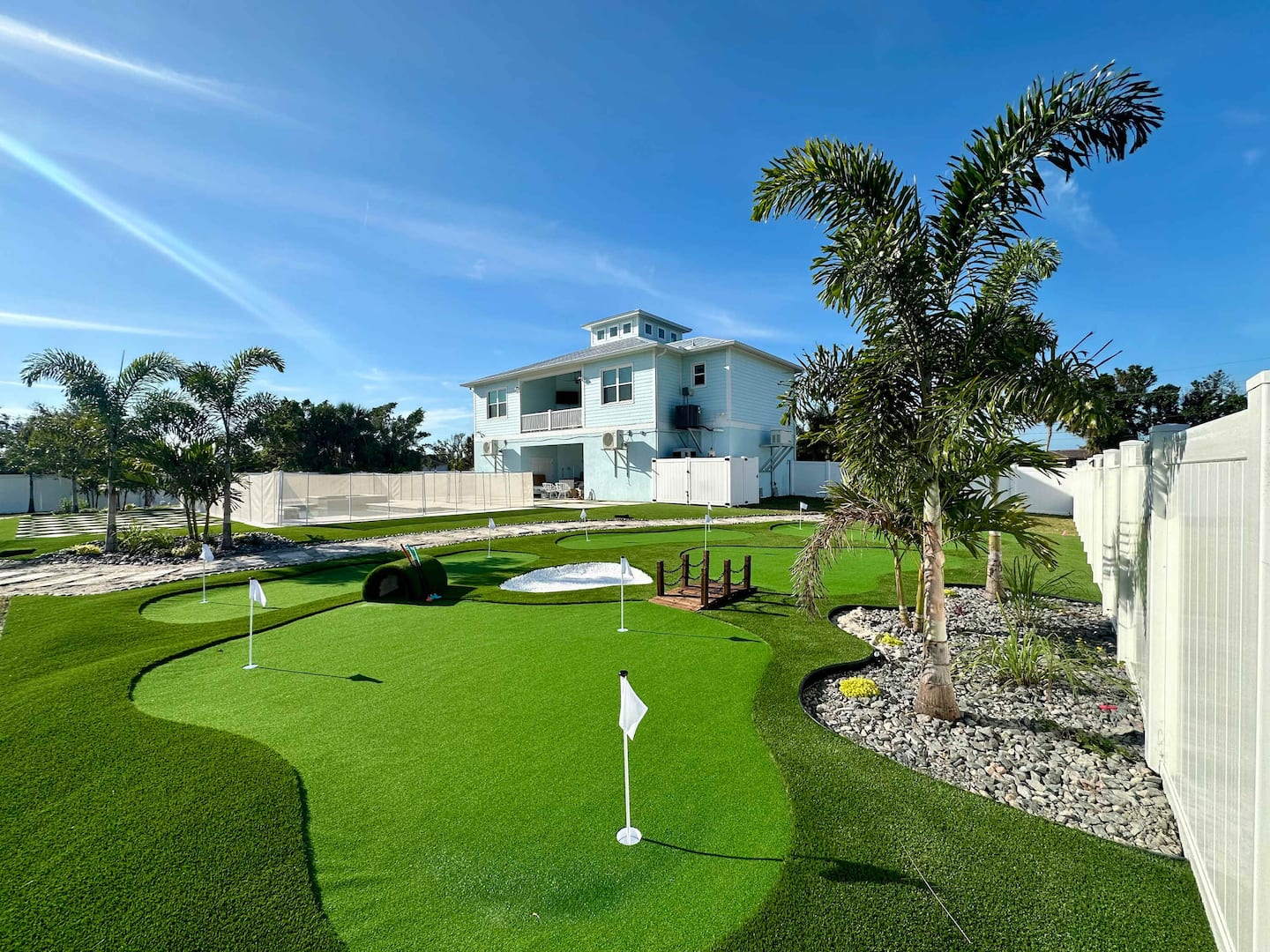
Rent a house when you want to arrive once. With a group of ten, the arithmetic is not close: Seaside Boca sleeps 10 across 3 bedrooms plus a bunk and 3.5 baths, with a pool, hot tub, infrared sauna, game room, and mini golf, and nobody has to level anything or empty a tank. There are 3.5 bathrooms, which for ten people is the entire argument.
Plenty of families do both: a few nights moving, then a week parked in one place. That is often the best version of a Florida trip, and it is what we would suggest if you asked us at the desk.
Where you will actually park it
The rig is half the decision. The site is the other half, and it is the half people research last.
| Type | What you get | Reality |
|---|---|---|
| Florida State Parks | Beautiful, natural, often waterfront | Books out far ahead; hookups vary |
| Private RV resorts | Full hookups, pools, laundry, wifi | Denser, pricier, less scenic |
| County parks | Cheaper, low-key | Fewer amenities, variable quality |
| Boondocking | Free, remote | Effectively no Florida summer option — no A/C |
Understand hookups before you book a site. Full hookups mean electric, water, and sewer at the pad. Partial usually means electric and water, so you dump at a station on the way out. No hookups means the generator, which means hours billed and a Florida night decided by your battery.
Electric service matters more than any brochure suggests: a 50-amp site runs two air conditioners, a 30-amp site typically runs one. In August, in Florida, that distinction is your entire quality of life. Confirm what your rig needs and what your site provides — they are two separate questions and nobody will connect them for you.
Book state park sites the moment your dates are firm. They open a reservation window well in advance and the good waterfront sites are claimed within minutes of it opening, especially for winter.
And one closing reality about driving the thing. A Class C is roughly eleven feet tall, and Florida is generously supplied with drive-throughs, gas station canopies, and parking garages that are not. Bridge and canopy strikes are the most common RV rental damage claim there is, and they are almost always someone's first day. Write the height on a sticky note and put it on the dash where you cannot avoid reading it. Then plan fuel stops at truck stops rather than ordinary gas stations, where the pumps are spaced for vehicles your size and you will not have to reverse a thirty-foot rig out of a mistake with an audience.
RV rental questions from first-timers
What is peer-to-peer RV rental?
Peer-to-peer RV rental is a marketplace where private owners list their own RVs directly to renters, rather than a company renting from a standardized fleet. It usually offers wider selection and better rates, with the trade-off that condition, handover, and support vary by individual owner.
What does LendRV rent?
LendRV is a peer-to-peer marketplace listing RVs and campers, boats, golf carts, and Jeeps and 4x4s. Listing is free and owners set their own price and rules. Every trip is backed by rental protection and every renter is verified before pickup. It operates across South Florida — Miami, Fort Lauderdale, West Palm Beach, and Naples.
What RV class is best for a family?
A Class C is the usual answer for a first family rental. It sleeps a real family, drives like a large truck rather than a bus, and avoids the towing question. Class A is a lot of vehicle to learn on, and towable options only make sense if you already own a capable tow vehicle.
What hidden costs come with renting an RV?
Mileage overages, generator hours, fuel, nightly campground fees, cleaning and dump fees, insurance, and bedding or kitchen kits are all commonly billed on top of the nightly rate. Mileage and generator hours are the two that most often surprise people on a long Florida trip.
Can I park an RV at a vacation rental home?
Usually not, and you should never assume it. Many communities and rental properties prohibit RVs and trailers on site. Our own Waters Edge Lodge explicitly prohibits RVs and trailers under its house rules. Always confirm with the property before planning to park a rig there.

Travel DRD - Free Land Vacations — IATA certified, IATAN and ASTA members, hosting families since 2007. We manage every home in this collection ourselves.
Last updated: July 14, 2026