Port Charlotte, Placida, and Cape Haze sit on the Charlotte County mainland in Southwest Florida, wrapped around Charlotte Harbor — Florida's second-largest estuary. Placida is the launch point for the Boca Grande Causeway to Gasparilla Island, which makes this quiet, residential stretch the practical base for families visiting Boca Grande.
Nobody puts Port Charlotte on a bucket list. There is no Port Charlotte skyline, no Port Charlotte postcard. It is a mainland Florida county seat area with strip plazas and a Costco and thirty-year-old neighborhoods, and it is exactly where a lot of very good family vacations quietly happen.
Here is why. Charlotte County wraps around Charlotte Harbor, and the Cape Haze peninsula runs southwest from it to the causeway that crosses onto Gasparilla Island. So the mainland is the door to the islands — and the door costs half as much as the room behind it.
Getting the geography straight
Visitors mix these names up constantly, so let us be precise:
| Place | What it is | Why you'd care |
|---|---|---|
| Port Charlotte | Large residential area on the mainland, north side of the harbor | Groceries, medical, big-box shopping, restaurants |
| Punta Gorda | Historic small city across the harbor | Waterfront downtown, the airport (PGD), the nicest dinner |
| Cape Haze | Peninsula running southwest toward the coast | Quiet residential, marinas, our house |
| Placida | Small community at the tip of the peninsula | The Boca Grande Causeway, boat ramps, fish houses |
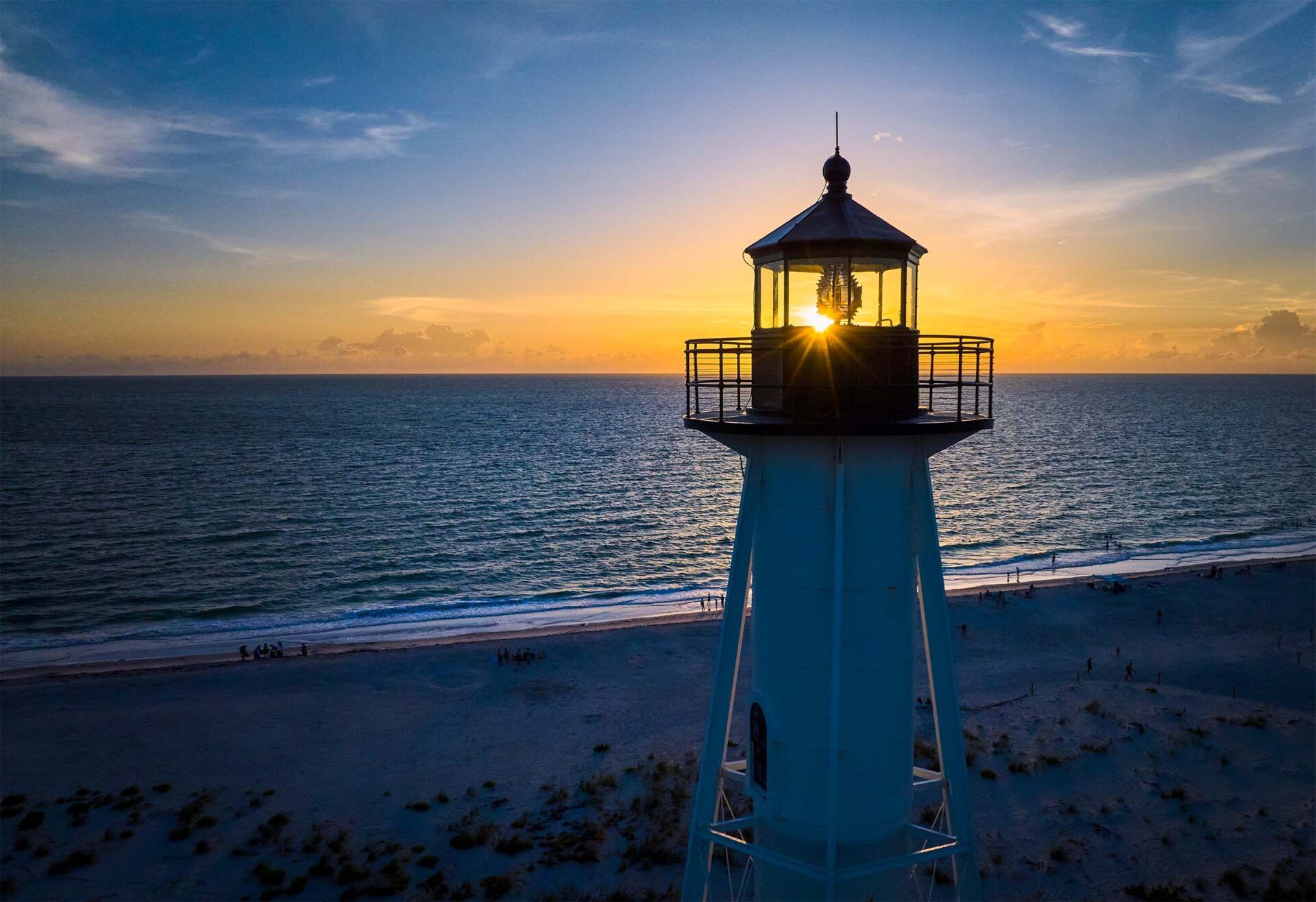
| Boca Grande | The village on Gasparilla Island | The beaches, the lighthouse, the pass |
Read that table backwards and you have the trip: you sleep in Cape Haze or Placida, you shop in Port Charlotte, you eat once in Punta Gorda, and you spend your days in Boca Grande. That is the whole plan, and it is a good one.
Charlotte Harbor is the actual attraction
This is the part visitors underrate. Charlotte Harbor is Florida's second-largest estuary, fed by the Peace and Myakka rivers, and it is a genuinely enormous, shallow, protected body of water. It is a nursery for snook, redfish, and trout, it is full of dolphins and manatees, and it is calm on days when the Gulf is not.
For a family, that calm is the product. When the Gulf is choppy and nobody wants to be on it, the harbor side is glass. It is the difference between a boat day and a cancelled boat day — see our <a href="/blog/boat-rental-southwest-florida/">Southwest Florida boat rental guide</a> for how to actually get on it.
The mainland is the door to the islands — and the door costs half as much as the room behind it.
Manatees, and the rules that come with them
Charlotte Harbor and its connected waters are manatee country. That is a privilege and an obligation. Florida enforces manatee protection zones with posted speed restrictions — idle speed, slow speed, or no-entry depending on the zone and the season — and those zones are not suggestions. Manatees are protected under both Florida law and federal law.
- Obey posted manatee zone signs. Seasonal zones change between roughly November and March in many areas.
- Never feed or give water to a manatee — it is illegal and it teaches them to approach boats.
- Wear polarized sunglasses. They are the single best manatee-spotting tool there is.
- If you see an injured or entangled manatee, call the FWC Wildlife Alert hotline rather than intervening yourself.
Punta Gorda: the one town worth a proper visit
If you make one non-beach trip on the mainland, make it Punta Gorda. It is a small historic city on the south side of the harbor with a walkable waterfront, a genuine downtown, murals, a harbor walk, and the region's best concentration of restaurants that are not attached to a plaza.
It is also where the closest airport is — Punta Gorda Airport (PGD), served primarily by low-cost carriers. Fort Myers (RSW) and Sarasota (SRQ) are the bigger options and are both a reasonable drive. If your family is flying in, price all three; the difference on four tickets often pays for a day of the trip.
Eating on the mainland
Set your expectations correctly and you will eat very well. This is not a fine-dining region; it is a fish-house region. The good version of dinner here is a waterfront place near Placida where the catch is local and the floor is concrete.
The other truth: with a group of ten, you will cook most nights, and you will be glad. Port Charlotte has full-size supermarkets and a warehouse club, which is a genuine advantage over island grocery shopping — where a week's food for a big family costs noticeably more and involves a bridge.
Why families base here instead of on the island
- More house per dollar. Island inventory is limited, older, and priced for scarcity. Mainland homes fit ten people with room left over.
- Real grocery stores. Ten minutes, not a causeway.
- Boat access. The ramps and marinas serving Boca Grande Pass are on this side.
- You still get the island. The causeway is minutes away, so the beach is a decision, not an expedition.
- Weather backup. When the afternoon storm rolls through — and in summer it will — a house with a pool and a game room beats a hotel room with a window.
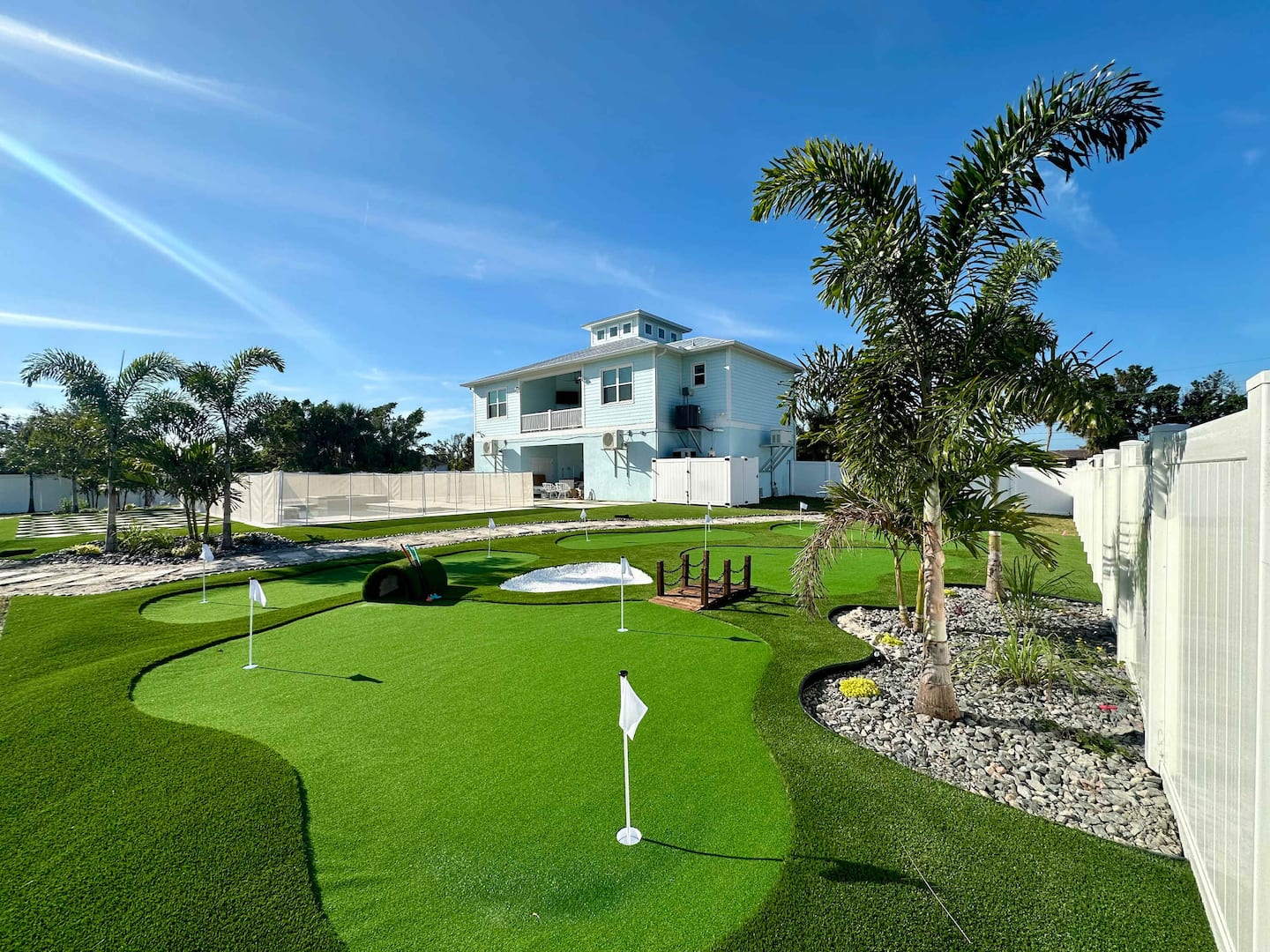
<a href="/seaside-boca/">Seaside Boca</a> is our house on this peninsula, and it was chosen for exactly the reasons above. It is a Key West-style home with a resort-style pool, hot tub, infrared sauna, private mini golf, volleyball and soccer courts, a game room, fire pit, BBQ grill, dock access, an EV charger, and high-speed wifi. On a storm afternoon it stops being lodging and starts being the itinerary.
When to come
Winter — roughly December through March — is the region's high season: dry, mild, and busy with seasonal residents. Late spring brings tarpon to the pass and a price spike with them. Summer is hot, humid, stormy in the afternoons, and much cheaper. Fall is the quietest and the riskiest, since Atlantic hurricane season runs June 1 to November 30.
If your dates fall inside that window, read <a href="/blog/hurricane-season-booking-florida/">how to book Florida during hurricane season</a> before you put money down. It is the single highest-value thing you can do for a summer or fall trip here.
The honest verdict
Port Charlotte is not a destination. Cape Haze and Placida are not destinations either. They are the well-located, sensibly-priced, slightly boring mainland that lets a family afford a week next to one of the best small islands in Florida.
Boring is underrated. Boring means parking. Boring means groceries. Boring means the pool is empty at seven in the morning. Go read the <a href="/blog/boca-grande-family-guide/">Boca Grande guide</a> for the exciting part — this is the part that makes it work.
Drive times, so you can plan honestly
Southwest Florida looks compact on a map and drives longer than it looks, largely because everything funnels onto a few roads and the seasonal population doubles in winter. Rough planning figures from the Cape Haze peninsula:
| From Placida / Cape Haze to | Roughly | Note |
|---|---|---|
| Boca Grande village | ~20 minutes | Across the toll causeway |
| Port Charlotte shopping | ~25 minutes | Groceries, big-box |
| Punta Gorda downtown | ~35 minutes | The nice dinner, the airport |
| Fort Myers / RSW airport | ~1 hour | Larger airport, more carriers |
| Sarasota / SRQ airport | ~1 hour | The other option worth pricing |
| Sanibel & Captiva | ~1.5 hours | A long but worthwhile day |
Treat those as fair-weather, off-season estimates. In February, add meaningfully to every one of them. The practical consequence is that you should not plan two distant excursions in one day here — pick one, and be home before the afternoon.
The other thing worth knowing: this is not a walkable region. Cape Haze and Placida are residential and spread out, with no town centre to stroll to. You will drive to everything, and you will want the car you rented to be big enough for however many people are in your group — a detail families routinely underestimate when there are ten of them.
One more mainland advantage worth naming: medical. Port Charlotte has real hospitals and urgent care. On a barrier island, a child's ear infection or a badly cut foot becomes a genuine logistical problem involving a bridge. It is a grim thing to plan for and an enormous relief when a family of ten needs it at nine on a Sunday night — which, statistically, some family of ten always does.
Mainland questions worth asking
Where is Cape Haze, Florida?
Cape Haze is a quiet residential peninsula in Charlotte County, Southwest Florida, running southwest from the Port Charlotte area toward the coast. It ends near Placida, where the Boca Grande Causeway crosses to Gasparilla Island and Boca Grande.
Should we stay in Port Charlotte or Boca Grande?
Families with a group usually get more house for the money on the mainland in Cape Haze or Placida, plus real grocery stores and boat ramps, while staying minutes from the causeway. Boca Grande itself has limited inventory that rarely fits eight to ten people under one roof.
What airport is closest to Boca Grande?
Punta Gorda Airport (PGD) is the closest, served primarily by low-cost carriers. Southwest Florida International in Fort Myers (RSW) and Sarasota-Bradenton (SRQ) are larger and both a reasonable drive. Price all three, since the difference across a family's tickets can be significant.
Are there manatees in Charlotte Harbor?
Yes. Charlotte Harbor and its connected waters are manatee habitat, and Florida enforces posted manatee protection zones with idle-speed, slow-speed, or no-entry restrictions that vary seasonally. Manatees are protected under state and federal law, and feeding them is illegal.
Is Charlotte Harbor good for boating with kids?
It is one of the better options in the region. Charlotte Harbor is Florida's second-largest estuary — large, shallow, and protected — so it stays calm on days the Gulf is rough. That makes it far more forgiving for a family boat day than open Gulf water.

Travel DRD - Free Land Vacations — IATA certified, IATAN and ASTA members, hosting families since 2007. We manage every home in this collection ourselves.
Last updated: July 14, 2026