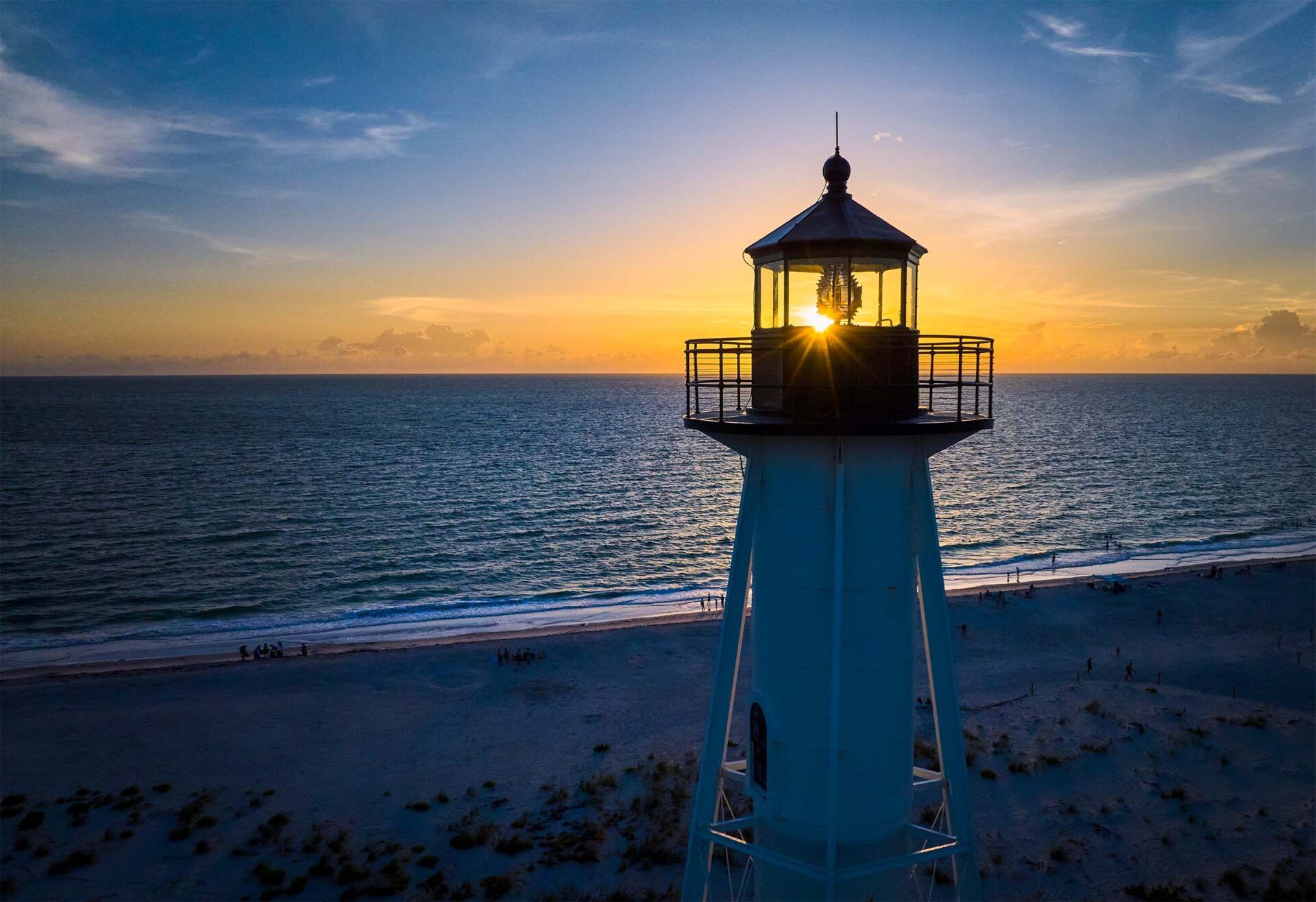
Gasparilla Island State Park sits at the southern tip of Gasparilla Island in Lee County, Florida, and covers the historic Port Boca Grande Lighthouse, a lighthouse museum, two separate beach access areas, a fishing pier at the mouth of Boca Grande Pass, and picnic pavilions. It's a paid day-use park — no camping — reachable by driving the length of the island past the village of Boca Grande.
Most families who visit Boca Grande know the village, the bike path, and the lighthouse from the outside. Fewer realize that the entire southern point of the island — the lighthouse, the museum inside it, both of the island's real public beaches, and the pier where people fish for tarpon from dry land — is one park with one entrance fee. Gasparilla Island State Park is small on a map and large in what it actually gives a family for one parking transaction.
We place families a few miles away in Placida, on the mainland side of the causeway, and this park is one of the two or three things we tell every guest to build a day around. It rewards showing up with a plan more than most parks, because it's really three or four separate stops stitched together by one road, and knowing the order changes the whole visit.
Where is the park, and how do you get in?
The park occupies the southern end of Gasparilla Island, past the village of Boca Grande, at the end of Gulf Boulevard. Getting there means crossing the Boca Grande Causeway from Placida — a toll bridge — then driving the length of the island through the village before the road narrows and the park entrance appears. From our <a href="/seaside-boca/">Seaside Boca</a> home in Placida, it's roughly a 20-minute drive to the causeway toll plaza, then another 10–15 minutes down the island depending on village traffic.
The park is a fee-per-vehicle day-use area — bring cash or a card for the entrance booth, and confirm the current rate at the official park page before you go, since Florida state park fees are set at the state level and do change. There is no camping here; this is a beach, lighthouse, and pier park, open daily from 8 a.m. to sundown.
Why does the park have two different beach areas?
This trips up first-time visitors. The park isn't one beach — it's stretched along the island's southern shoreline with more than one distinct access point, and each has a different personality. The stretch nearer the lighthouse end tends to be calmer and more sheltered, popular with families with younger kids and with shellers working the tide line. Access points farther up the shoreline face more open Gulf and tend to draw swimmers and anglers.
The practical takeaway: if you arrive and the first parking area looks crowded, don't turn around and leave the park — drive to the next access point. Families who don't know this sit in one lot circling for a spot when open beach sits a five-minute drive away.
Is the lighthouse and museum worth the stop?
Yes, and it's the anchor of the whole visit. The Port Boca Grande Lighthouse was built in 1890 and sits at the island's southern point, inside the park boundary. It's been restored and now houses a museum covering the barrier island's history — the Calusa people who lived here first, the phosphate-shipping boom that built the lighthouse in the first place, and the fishing culture that followed. The museum has its own posted hours and sometimes a small separate admission on top of the park entrance fee, so build in flexibility rather than assuming a fixed schedule.
It's really three or four separate stops stitched together by one road, and knowing the order changes the whole visit.
Budget about an hour for the lighthouse and museum together, including the walk around the point afterward. That walk is the part families remember — a wide, unobstructed view of Boca Grande Pass, one of the deepest natural passes on Florida's Gulf coast, with boats working the current and pelicans working the boats.
What about the fishing pier?
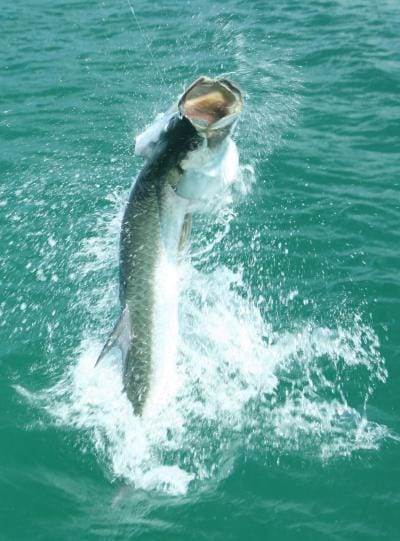
The park includes a fishing pier near the pass, and it's the one place in the whole Boca Grande area where a family can fish for tarpon-adjacent species without a boat, a charter, or a license headache for anyone fishing from the shore under Florida's shoreline exemptions (confirm current license rules for your situation — they vary by age, residency, and where you're standing). Even families who never bring a rod find the pier worth a stop: April through August, this stretch of water is one of the more reliable places on the whole Gulf coast to watch boats working tarpon without being on one.
| Stop | Time to budget | Best for |
|---|---|---|
| Lighthouse & museum | 45–60 minutes | History, restrooms, the point view |
| Beach access (calmer side) | 1–3 hours | Younger kids, shelling, sheltered water |
| Beach access (open Gulf side) | 1–3 hours | Swimming, sunset, more open sand |
| Fishing pier | 20–45 minutes | Shoreline fishing, watching the tarpon boats |
| Picnic pavilions | 30–60 minutes | Lunch break between stops |
What facilities are actually there?
The park has picnic pavilions and tables scattered near the beach access points, along with restrooms and outdoor showers — enough infrastructure to make a full day work without a village run for lunch. There's no food service inside the park itself, so pack in what you need; the village of Boca Grande a short drive back up the island has restaurants and the Pink Pony for ice cream if you'd rather make the park a half-day and the village the other half.
When is the best time to visit?
- Winter and early spring (roughly December through April) bring the coolest weather, the best shelling on the calmer beach access, and thinner crowds than summer.
- Weekday mornings beat weekend afternoons at any time of year — the parking areas are small, and they do fill on holiday weekends.
- April through August is tarpon season in Boca Grande Pass, which makes the pier and the point view genuinely more interesting but also brings more boat and vehicle traffic to the whole south end of the island.
- Arrive by mid-morning if you want your pick of both beach access areas; afternoons in season can mean circling for parking.
A day plan that actually works
Start at the lighthouse and museum first, while everyone still has patience for a history stop and before the day gets hot. Walk the point for the pass view, then move to whichever beach access matches your kids — the calmer stretch for toddlers and shellers, the open side for stronger swimmers. Break for a picnic at one of the pavilions, then finish at the pier for twenty minutes of watching boats before the drive back up the island through the village for ice cream at the Pink Pony.
Where should a family stay to make this easy?
Staying on the island itself puts you inside the village, but inventory is limited and priced for it, and larger families rarely find one roof that fits everyone. Staying on the mainland at Placida or Cape Haze — a short drive from the causeway — gets a family more house for less money and puts this park within twenty-five minutes of the front door.
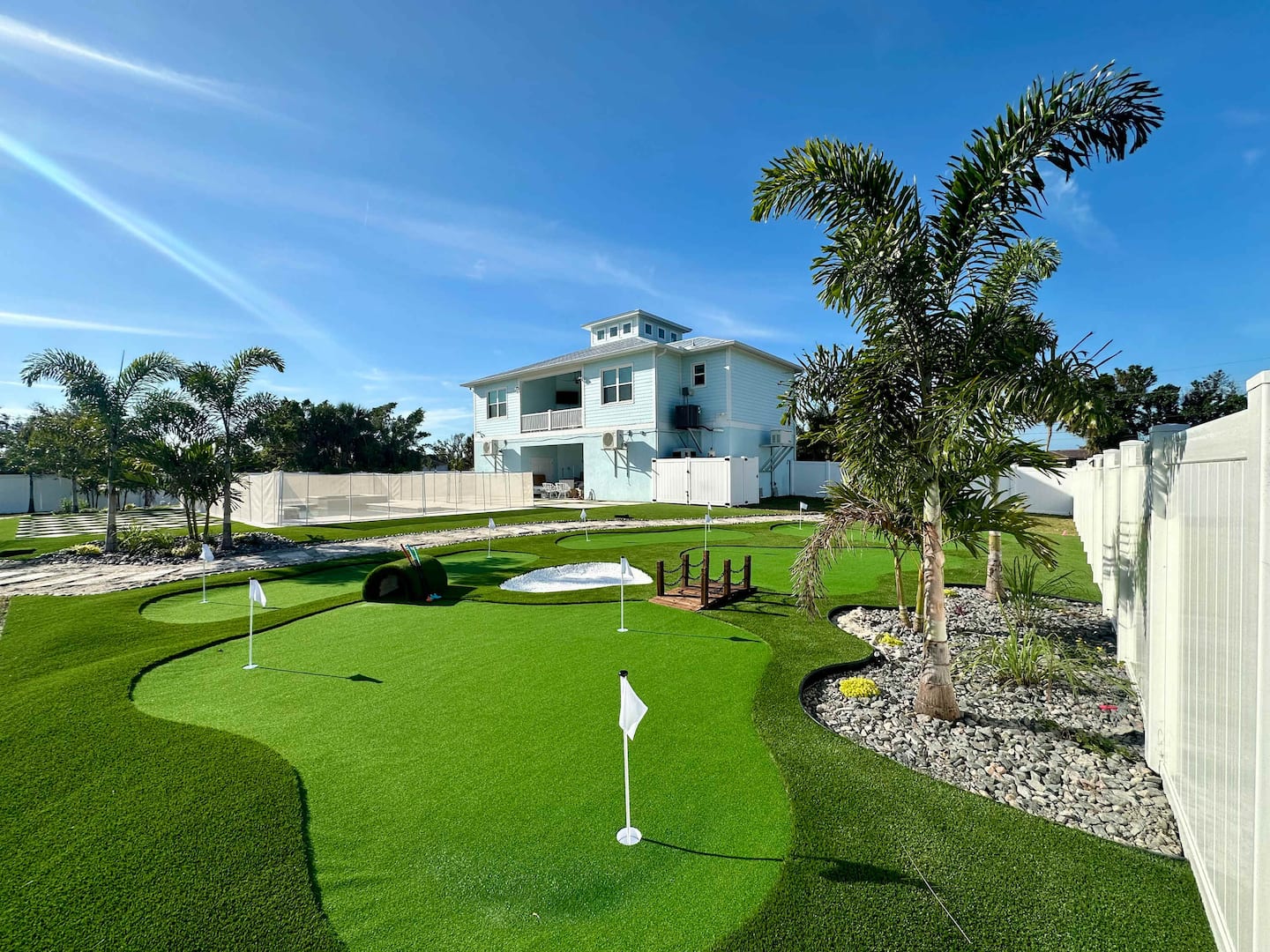
That's the trade-off behind <a href="/seaside-boca/">Seaside Boca</a>, our Key West-style home in Placida that sleeps 10 across 3 bedrooms and 3 baths, with a resort-style pool, hot tub, infrared sauna, private mini golf, and dock access — close enough to the causeway that the park, the lighthouse, and the village are all a short drive rather than a commitment. For the wider context on this stretch of the mainland, see our guide to <a href="/blog/port-charlotte-cape-haze-guide/">Port Charlotte, Placida, and Cape Haze</a>, and for the village and bike path side of the island, our <a href="/blog/boca-grande-family-guide/">Boca Grande family guide</a> covers what's off park grounds.
If you're bringing boats or paddleboards to explore the pass and harbor beyond the park itself, our guide to <a href="/blog/boat-rental-southwest-florida/">boat rentals in Southwest Florida</a> covers the practical side of that.
Gasparilla Island State Park questions families ask
Is there an entrance fee for Gasparilla Island State Park?
Yes, it's a paid day-use park with a per-vehicle entrance fee collected at the booth. Florida sets and periodically updates state park fees, so confirm the current rate at floridastateparks.org before your visit.
Can you camp at Gasparilla Island State Park?
No. This is a day-use park — lighthouse, museum, beach access, pier, and picnic areas — with no campground. Plan on a day trip and stay in the Boca Grande area or on the Placida/Cape Haze mainland instead.
Do I need a separate ticket for the lighthouse museum?
The museum inside the restored Port Boca Grande Lighthouse sometimes has its own hours and small admission on top of the general park entrance fee. Check current hours before you go, since museum schedules can differ from the park's own hours.
Which beach access area is better for young children?
The beach access nearer the lighthouse tends to be calmer and more sheltered, which is generally the easier stretch for toddlers and younger kids and for shelling along the tide line. The access points farther up the shoreline face more open Gulf water.
How far is the park from Placida and Port Charlotte?
About 20 minutes from Placida to the Boca Grande Causeway toll plaza, then another 10–15 minutes down the length of the island through the village to the park entrance — roughly 30–35 minutes total from the Placida/Cape Haze mainland.

Travel DRD - Free Land Vacations — IATA certified, IATAN and ASTA members, hosting families since 2007. We manage every home in this collection ourselves.
Last updated: July 15, 2026